Skip to content

    Borrow Capital

    Equity is the most expensive money a company will ever take. Sometimes it is still the right money. Often it is not.

    Government debt asks what you are buying. Venture debt asks who just backed you. (read where we wrote it)

    Not every need should be paid for with a share of your business. A loan is priced in rupees. Selling shares is priced in the whole future of the business. Too many owners give up more of the company than they had to.

    Mainly for

    Which layer should pay for what?

    Money comes in layers, ordered by how much return it wants back and how much risk it will take. Each layer should lower the risk enough to make the next one cheaper.

    Start from what the money is for

    • Day-to-day cash (working capital)
    • Machinery and premises (capex)
    • Growth spend
    • Proving something unproven

    Match each need to the cheapest layer that will pay for it. Don’t raise one big number and let one kind of money cover everything. Most owners find at least one need belongs in a different layer.

    Read the essay: the capital stack, cheapest to most commercial

    Most commercial
    1. Senior debtA loan at the market rate, from a bank or a development institution, and the first to be repaid. Every layer below it has been building up to this one.
    2. Commercial impact equityInvestors take a share of the company and expect a real return, and they check your impact as hard as your numbers.
    3. Concessional and soft debtLoans cheaper than the market rate, or for longer than a normal lender will give. It wants proof you can repay and a case for your impact, not shares.
    4. Guarantees and risk-sharingYou pay a fee, not shares. A guarantor covers part of the lender’s loss, and the lender says yes.
    5. Catalytic and first-loss capitalA small slice that takes the first loss, and changes the price of everything above it.
    6. Grants, philanthropy and CSRYou give up no shares and repay nothing. What it costs you is reporting.

    Cheapest

    Debt and blended finance

    Why do lenders say no, and what changes their answer?

    “We have no collateral, or not enough.”
    A guarantee covers part of the lender’s loss. You pay a fee for it, not shares, and the lender becomes willing to lend.
    “We need longer than they will lend for.”
    Concessional debt is lent on softer terms. If your business can show a social or environmental impact, it can run longer than a normal lender will allow. That is a different kind of loan, not a discount.
    “A loan we repaid years ago is still on record.”
    Lenders check your company’s public record before your numbers. An old loan shows there as a charge, a claim on your assets. It stays until you file that the loan was repaid, however long ago.

    This is the single most common blocker we find, and it’s paperwork, not credit. (read where we wrote it)

    What did borrowing well change for them?

    Pharma: Ahmedabad

    ₹4 Cr working capital structured in 60 days.

    A mid-size API manufacturer was running on expensive informal credit. We renegotiated banking limits, cleaned the books, and structured a proper CC facility: reducing cost of capital by 30%.

    Climate Tech

    24 months of runway secured

    Capital Strategy for a Climate-Tech Founder

    Planned grants, a venture loan and equity, raised in stages, to give the company more months of cash without giving up more shares.

    See every case study

    Find out which layers are open to you

    It shows whether impact and blended finance are open to you, and which kinds of funding fit your stage. Blended finance mixes low-cost and commercial money.

    It asks four questions. Does your business work on a problem that matters? Is the good you do part of how you make money? Would ordinary lenders and investors pass businesses like yours by? Can you prove your results with data? It also asks what the next money is for. You do it with our team, so the answer comes with a conversation.

    Read these before you borrow

    • Blogs

      18 Sept 2026, 5 min read

      The Capital Stack, Cheapest to Most Commercial

      Founders raise a round. Capital actually comes in layers, ordered by how much return it wants back. Each layer should buy the de-risking that makes the next one cheaper, and taking them out of order is expensive.

    • Research Briefs

      20 Sept 2026, 10 min read

      The MSME owner's guide to getting paid, funded and sold

      Customers pay late, credit is hard to get, and nobody has planned for the day the founder steps back. There are rules and records that help with all three, and most owners are not using them.

    • Blogs

      16 Sept 2026, 9 min read

      The Capital Most Founders Never See

      A diagnostics chain across tier-2 towns was told its margins were thin and its geography hard. In the language of a whole class of investors, it was an impact business, and there were funders whose entire job was to back exactly what it was building. Not a shortage of capital: a blind spot about which capital.

    • Blogs

      18 Sept 2026, 5 min read

      Who Actually Funds This: A Founder's Map

      Five families fund impact businesses in India, each with its own calendar and behaviour. Knowing which one fits saves months of chasing the wrong door.

    • Blogs

      16 Sept 2026, 8 min read

      RevenueOS for manufacturing

      A revenue operating system for manufacturers: planning from plant capacity, demand built rather than found, and collection tracked as closely as dispatch.

    • Research Briefs

      11 Sept 2026, 7 min read

      One stack, many shapes

      Every company runs on the same information stack, but the stream that hurts you first depends on how you make money. Sriram Chidambaram walks the archetypes (SaaS, platforms, D2C, manufacturing, deep tech) and the two streams almost everyone under-instruments.

    Where else might the money come from?

    Running an accelerator or a corporate venture programme? See Strategy Labs.

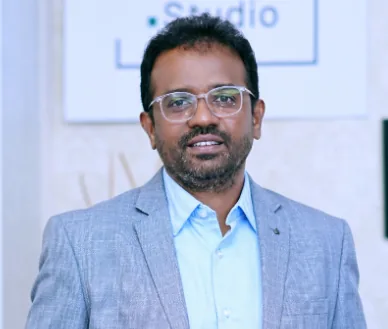
    From Sriram Chidambaram, Founder & Managing Partner

    Put the concessional layer in first, in the right place, and it does the heavy lifting of de-risking everything above it. Done well, a small slice of patient money changes the price and the availability of all the capital that sits on top of it.

    The concessional slice is the lever. The commercial money it pulls in is the prize.

    Sriram Chidambaram, Founder & Managing Partner