
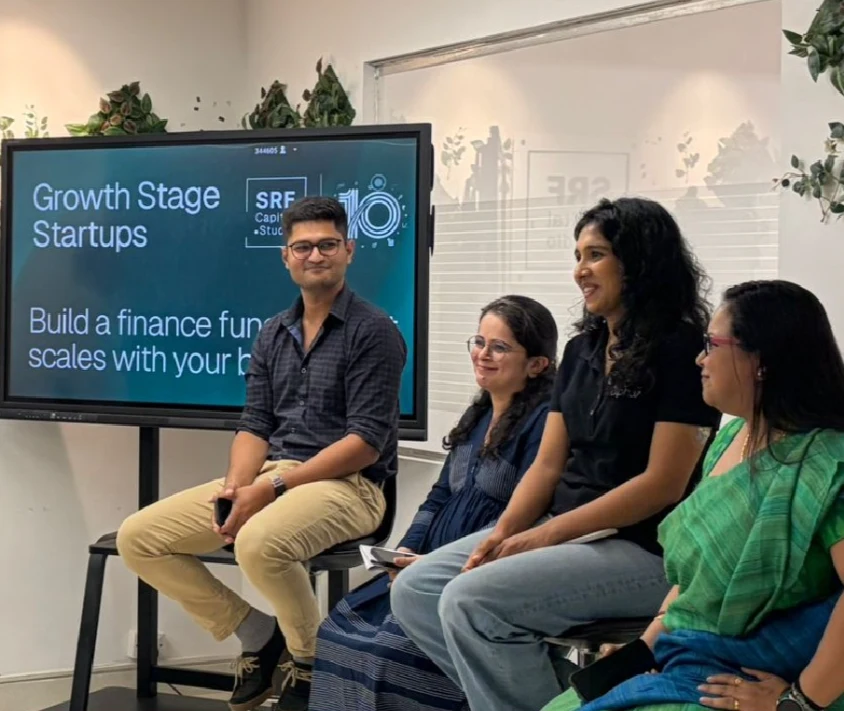
Most founders spend months chasing capital. Very few spend time designing their capital strategy.
The second edition of Studio Connect moved from ownership to the broader question underneath it — not how to raise money, but how to structure it. Grants, catalytic capital, debt, venture debt and equity are not a ladder to climb in order. They are different instruments, and each one makes sense at a different moment for a different reason.
That is why SRF Capital Studio hosted Studio Connect: Capital Architecture — bringing investors, grant-makers, incubators and founders into one room to talk about how capital decisions actually get made.
Why Capital Architecture Matters
Building a startup is not only about raising capital. It is about structuring capital strategically, so that growth is sustainable rather than merely fast.
Capital decisions influence growth, flexibility, dilution and long-term sustainability — and unlike most decisions a founder makes, they are difficult to undo.
Key Themes Discussed During the Session
Grants and Catalytic Capital
The conversation opened where most fundraising conversations do not: with the money that costs no ownership at all. Grants and catalytic capital are slower to secure and heavier on paperwork, which is precisely why they are under-used.
For businesses working on hard problems — science, climate, deep-tech — this is often the capital that funds the years before an equity investor is willing to price the risk.
Debt and Venture Debt
Debt extends runway without giving away ownership, but it has to be paid back — which makes it a very different instrument from equity, suited to a different moment.
The session looked at when borrowing is the cheaper answer, and when it quietly becomes the more expensive one.
Equity, and When It Is Actually the Right Tool
Equity is the default founders reach for, and the discussion pushed back on that reflex. Selling ownership at a set value makes sense at specific points in a company's life, not at all of them.
The question is not whether you can raise equity, but whether this particular need is the one equity should be answering.
Matching the Instrument to the Stage
The through-line of the evening: capital decisions compound. Each one shapes how much flexibility, ownership and control a founder still has when the next decision arrives.
Designing that sequence deliberately — rather than taking whatever is available when the money runs low — is what separates a capital strategy from a series of raises.
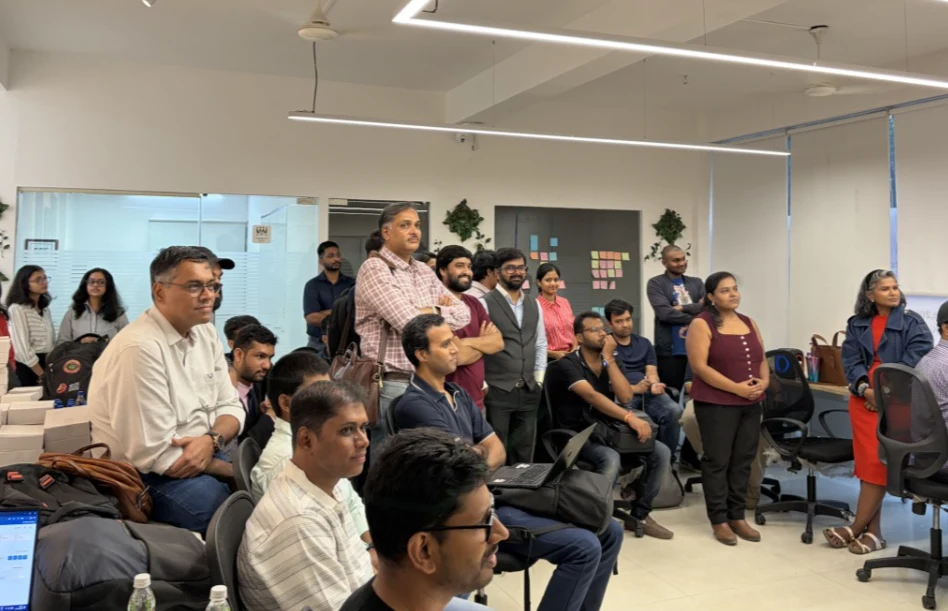
Voices from the Ecosystem
The session featured valuable perspectives from ecosystem leaders:
- Richard PintoThe investor's read on capital structure3one4 Capital
- Indrayani KaduGrants and catalytic capitalSocial Alpha
- Susmita GhoshWhat incubation support actually unlocksNSRCEL
- Shreyas TonseThe founder's side of the tableInverix Innovations
- Shelly K.Impact finance pathwaysVillgro